1. AJEDEC’s Contribution to Youth Social Cohesion in the City of Bunia
With funding from the United Nations Organization Stabilization Mission in the Democratic Republic of the Congo (MONUSCO) and the Ituri Provincial Government through the project entitled “Support to the Socio-Economic Reintegration Process of Demobilized Ex-Combatants to Strengthen Peace and Social Cohesion in the City of Bunia”, AJEDEC made a significant contribution to reducing community violence and strengthening peace and social cohesion among displaced youth, demobilized ex-combatants, and young people from host communities in Bunia towards the end of 2018.
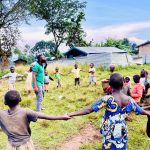
This was achieved through the rehabilitation of Amani Stadium in Bunia, a symbolic venue for peace and social coexistence in the city, using the High-Intensity Labour-Based (HIMO) approach.
At the time, acts of violence were occurring across the city, highlighting tensions among these vulnerable groups of young people. The project successfully brought together these groups, who previously struggled to accept one another, by engaging them in joint rehabilitation activities.
Beyond the HIMO activities, AJEDEC worked closely with the Bunia Youth Council and the City Hall to organize dialogue sessions on peace and peaceful coexistence, as well as training and awareness-raising campaigns. Beneficiaries, in turn, conducted sensitization activities among young people in their respective neighbourhoods.
The decline in violence across Bunia was a clear indication of the direct positive impact of the project on the lives of local communities.
2. Life Story: From a Displacement Camp to a Resident of Nyamusasi, Tchomia
Mr. Floribert Zebo was born in 1988 in Largu, located in the Bahema-Nord Chiefdom, Drodro Health Zone, Djugu Territory.
“Against all expectations, on May 26, 2018, I was forced to leave Largu, my native village, and a few days later I found myself in the Nyamusasi displacement site in Tchomia. Although I had settled there, the peace I sought by fleeing Largu had still not been found.”
Life in the displacement site was a daily struggle against poverty, insecurity, and the challenge of being accepted by the host community.
“In Largu, I made my living through farming. But here in Tchomia, there is no free land. Every piece of land belongs to someone.”
Displaced people were strictly prohibited from using even the smallest plot of land, which further exacerbated their vulnerability, as access to farmland would have enabled them to support themselves.
Then came the project “For a Peaceful Djugu: Social Cohesion, Economic Reintegration, and Youth and Women’s Engagement for the Pacification of Djugu Territory.”
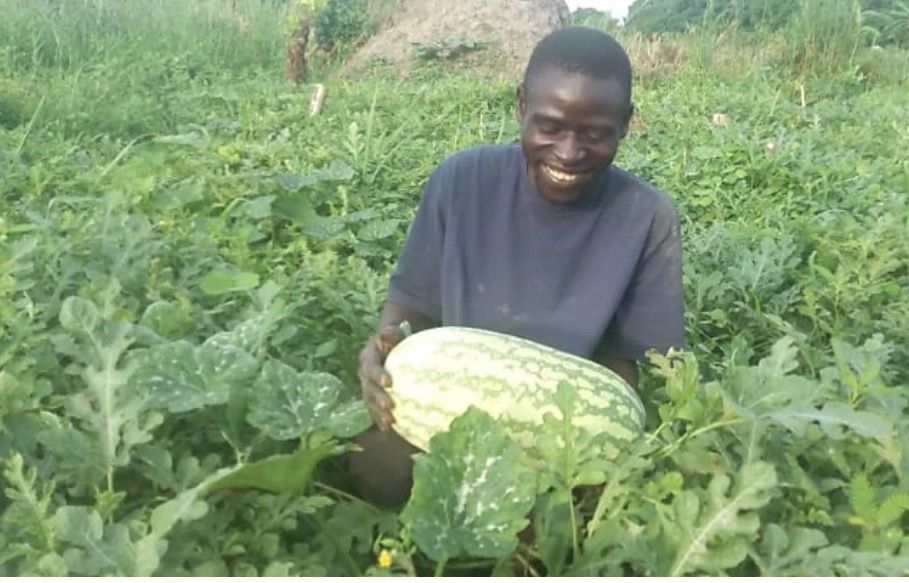
Mr. Zebo was selected as one of the direct beneficiaries. Through the project’s mediation efforts, access to land was secured, allowing him to choose agriculture and join the Nyamusasi farming group.
Advocacy initiatives were carried out with local authorities, resulting in the allocation of land for project activities. Within his group, Mr. Zebo developed expertise in vegetable farming, which has become his primary source of income and facilitated his full integration into the host community.
With the income generated from his activities, Mr. Zebo was able to purchase a plot of land where he now lives, transforming his status from a displaced person to a resident of Nyamusasi village in Tchomia.
“Now I am accepted, and I feel at home here. This is now my new village,” he concludes
3. “Peace Is Something We Can Give Ourselves”
“Peace is something we can give ourselves by choosing to live in harmony with others and by resolving the differences that may arise in our relationships through peaceful means.”
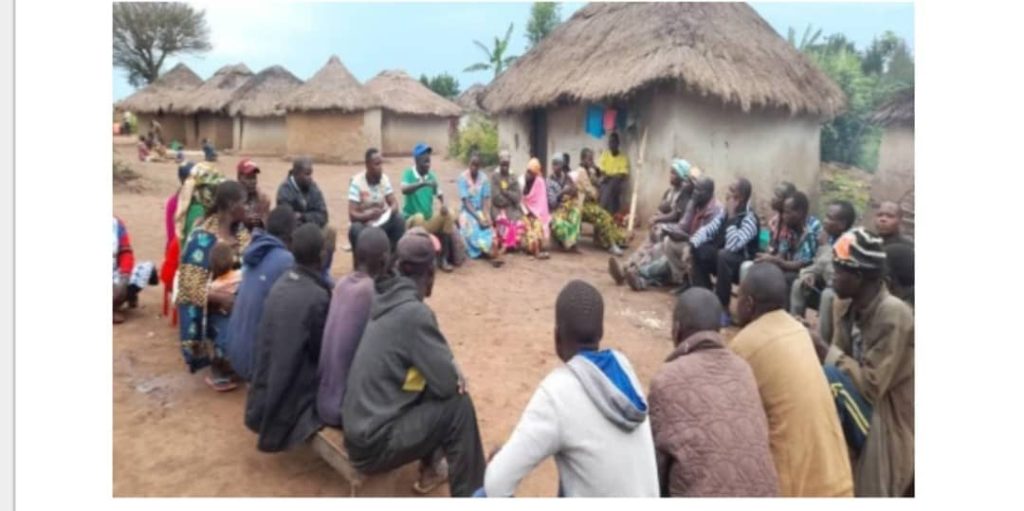
— Statement by the Chief of Fataki Grouping during peace and peaceful coexistence dialogue sessions involving the populations of Fataki (Hema) and Arr village (Lendu) in Djugu Territory.